


Bus Arrival
4.4697.00 Reviews
App Specs
- Version
- 4.1.1
- Updated On
- License
- Free
- Downloads
- 100,000,000+
- Developer
- Sixcube
- Categories
- Racing
- Platform
- Android, iOS
Screenshots



 Analysis by AppCompare
I judge a small racing game by what happens after the first tap: does an action produce clear feedback, does a reward make sense, and is the next attempt tempting rather than obligatory? Bus Arrival is built around a straightforward bus-themed loop, so it is easiest to enjoy when you want a quick game rather than a deep driving simulation. I would approach it as a casual pick-up-and-play option, not as a realistic transit tool or a substitute for a more demanding racing game.
From the first move to the next run
I look at the first move as a quick test of whether this bus-themed racer feels inviting or confusing. In the sections ahead, I focus on how to learn from each attempt, what makes a retry worthwhile, and where its lightweight approach fits among mobile racing games. That makes it easier to decide whether a short run suits your spare moments or whether you would rather choose a more involved racer.
Getting into the action
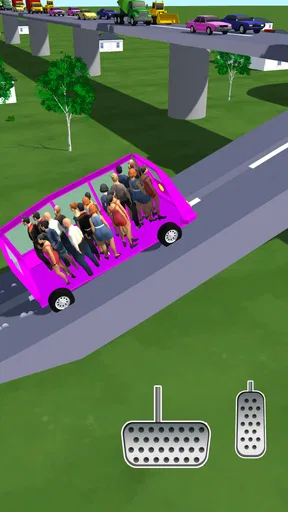
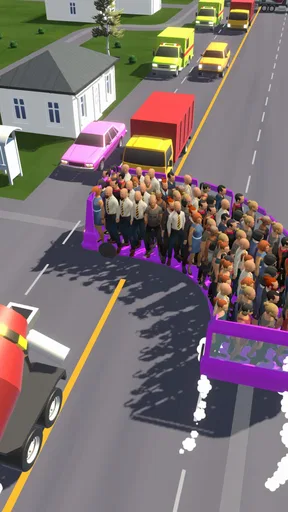
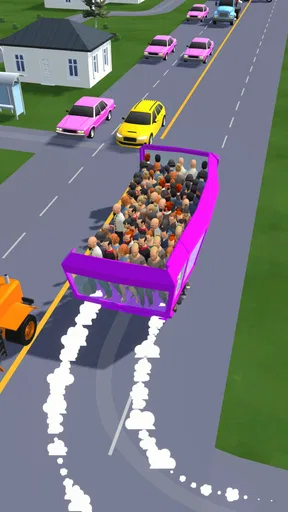
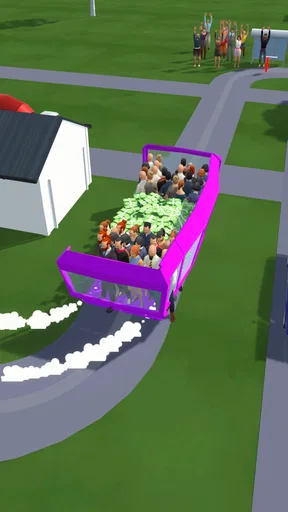
The basic appeal is immediate: you are dealing with a bus in a racing game, an unusual change from the cars that dominate the genre. That difference gives the premise its own flavor without asking me to learn a complicated set of racing rules before I can begin. I can see it working well for a short break, when I want to make a few moves and find out whether I can improve on the last try.
The title and bus theme set expectations, but I would not treat this as a transit utility. The store summary, “Bus Arrival! All aboard!”, is playful, and the game belongs to racing rather than public transport. If you are looking for live arrival times, commuter route planning, or practical help at a bus stop, this is the wrong kind of app. Its point is entertainment: getting into a bus-centered racing loop and deciding whether one more attempt sounds fun.
Reading feedback as you play
For a quick game to hold my attention, the important thing is whether each action gives me an understandable response. A bus racing premise naturally makes me curious about how movement, obstacles, and progress fit together, but I would keep expectations grounded: this is a casual mobile game, not a detailed vehicle simulator. Players who enjoy learning a compact game by trying, noticing what happened, and adjusting on the next run are likely to get more from it than someone who expects realistic bus handling or a long technical tutorial.
A useful way to approach a new run is to focus on one decision at a time instead of tapping frantically. Notice what changes after an action, then make a small adjustment on the next attempt. That kind of deliberate retry helps reveal whether a setback came from timing or a choice you can alter. It also makes the game more satisfying than treating every run as a quick blur and hoping for a better result.
What keeps the loop moving
The reward in a compact racing game is often less about a sprawling story and more about seeing a run go better than the one before. That is the standard I would use here: does the outcome give me a reason to try again, and can I feel a little more in control after a few rounds? The bus theme helps the game stand apart visually in a category crowded with familiar cars, while the short-session format makes it easier to return without setting aside a large block of time.
Worth Reading Before You Choose

Baby Panda World Brings Quick Play to Modern Phones, but Its Game Library Feels Busy

ESPN’s Live Game View Makes Following Close Games Easier

QuizzLand Review: A Good Fit for Short Trivia Breaks, Not Every Player

Basketball Stars: Multiplayer Is Fast, but Can It Recover When Matches Go Wrong?

WEBTOON Turns Phone Updates Into a Better Reading Routine

Link to Windows Runs on Shared Habits, Not Social Feeds
There is a trade-off to that simplicity. If your favorite racing games are built around extensive vehicle tuning, realistic tracks, or a long campaign, a lightweight bus-themed game may feel thin by comparison. I would choose it for an easy, low-commitment diversion, not for the depth that comes from mastering a sophisticated racing system. That distinction matters: a modest loop can be enjoyable, but it should not be mistaken for a full-scale racing experience.
Why a new session makes sense
For me, the best reason to start another session is a clear, personal target: make a better decision, last longer, or simply see how the next attempt feels. A game that lets me return quickly is convenient when I have a few spare minutes, but that convenience can also make repeated runs blur together. I would take a short pause if I notice I am repeating the same action without learning anything; coming back with one specific thing to test makes the retry feel intentional rather than automatic.
This makes the game a better fit for brief moments—waiting for someone, taking a break between tasks, or relaxing for a few minutes—than for a planned evening of serious racing. It is also a sensible choice for players who prefer a simple premise and do not want to spend their free time managing a complex garage or learning simulation controls. If you mainly want a competitive challenge or layered progression, a more substantial racing title will probably suit you better.
Where it sits among racing games
Compared with the usual mobile racing alternatives, the bus theme is the most distinctive reason to give this one a look. Traditional car racers tend to sell speed, vehicle variety, or more involved driving; a casual bus-focused game has a different, more playful identity. I would pick it when that change of pace sounds appealing. I would pick a conventional racer instead if I wanted a stronger sense of speed, realistic handling, or a broad selection of cars and race formats.
That comparison also helps set expectations for replay value. A short-loop game can be welcome precisely because it does not demand a long commitment, but a player who needs a steady stream of new systems may tire of repetition. Before settling in for a long session, I would try a few rounds and ask whether the action itself remains enjoyable. If the answer is no, the bus premise alone is unlikely to carry the experience for you.
Who should give it a try
I would recommend it most to casual players who like racing but are open to a lighter, less conventional theme. It may also suit someone who wants a game that can be picked up between everyday errands without needing a long warm-up. The bus angle gives it an easy conversation-starter quality, and the straightforward format can be more approachable than racers that expect players to understand detailed controls or vehicle setups from the start.
I would skip it if you are specifically searching for a real-world bus simulator, transit information, or a deep racing career. The distinction is especially important for younger players or anyone choosing a game for family use: it is a racing game with an Everyone age rating, not a guide to public transportation. It is free to download, while optional in-app purchases range from $0.49 to $99.99 per item, so I would check purchase prompts carefully if a child will be playing or if you prefer to avoid spending inside games.
On Android, the current version is 4.0.7 and the minimum operating system is 7.0. That makes compatibility worth checking before installing, particularly on an older device. Sixcube is the developer, and the game has a 4.5 average from around 324 thousand ratings, with more than 50 million installs. Those figures suggest broad interest, but they cannot tell you whether its particular pace and repetition will match your taste; a few minutes of play are a better test.
Practical expectations before installing
One question people often have is whether the title is about catching a real bus. No: it is a racing game, so I would not rely on it for schedules, route changes, or a commute. Another is whether it costs money to start. It is free to install, though optional purchases are available, so the sensible approach is to treat spending as optional and review any purchase screen before confirming anything.
Players may also wonder whether it can replace a more familiar racer. That depends on what they want: the bus theme gives it a distinct identity, but anyone seeking complex controls, realistic driving, or a lengthy progression path should look elsewhere. And if you are unsure whether you will enjoy repeating short attempts, try it during a naturally brief break rather than expecting a long-form game. That gives you a fair impression without turning a casual trial into a commitment.
First Impressions
Right off the bat, Bus Arrival makes a solid first impression with its clean and intuitive interface. Opening up the app, you’re greeted with a user-friendly dashboard that doesn’t overwhelm you with too many options. Everything feels just right, and within a few taps, you’re ready to start tracking your bus.
Real-Time Tracking
So, here’s the big question: how accurate is the real-time tracking? I decided to put it to the test during my daily commute. And guess what? It’s surprisingly precise! The app uses GPS data to show you exactly where your bus is. It updates every few seconds, so you’re never left wondering if you’ve missed it. I’ve got to say, this feature alone is a game-changer for anyone who relies on public transport.
Easy Navigation
One thing I really appreciate about Bus Arrival is how easy it is to navigate. The app lets you save your favorite routes, which is a lifesaver. No more scrolling through endless options to find your usual bus line. Plus, you can check schedules, set reminders, and even get notifications when your bus is arriving. It’s these little details that make a huge difference in everyday use.
Design and Usability
In terms of design, the app strikes a nice balance between functionality and aesthetics. The color scheme is pleasant, and the icons are easy to understand without needing a manual. I also noticed that the app runs smoothly without any lag, which is crucial when you’re in a hurry and need information fast.
Additional Features
Beyond just tracking, Bus Arrival offers some nifty features that enhance the overall experience. There’s an option to get alerts about service disruptions or route changes. This came in handy more than once when unexpected maintenance popped up. Another cool feature is the ability to share your location with friends. Perfect for letting them know when to expect you!
For those who like to plan ahead, there’s also a trip planner. You can enter your destination, and the app will suggest the best route, complete with transfer options if needed. It’s like having a personal transit assistant in your pocket.
Room for Improvement
While Bus Arrival is mostly impressive, there are a couple of areas where it could improve. For instance, the app currently doesn’t offer offline maps. This can be a bit of a drawback if you’re commuting through areas with spotty internet coverage. Also, while the app supports a wide range of cities, there are still some areas where coverage is limited. Hopefully, these gaps will be addressed in future updates.
Final Thoughts
All in all, Bus Arrival is a must-have app for anyone who frequently uses public transportation. It takes the stress out of commuting by offering real-time updates and a host of handy features that make getting around town a breeze. While there’s room for a few tweaks here and there, the current offering is robust enough to make it a valuable tool for any commuter.
So, next time you’re standing at the bus stop wondering if you’ve missed your ride, just fire up Bus Arrival. Trust me, you’ll wonder how you ever lived without it!
Pros
- Real-time updates ensure timely information.
- User-friendly interface for easy navigation.
- Customizable alerts for preferred routes.
- Covers multiple cities for extensive use.
- Low data usage
- saving on mobile costs.
Cons
- Occasional delays in update refreshment.
- Limited offline functionality.
- Ads can be intrusive at times.
- Requires GPS for accurate tracking.
- Not all routes are comprehensively covered.
FAQs for Bus Arrival
What features does the Bus Arrival app offer?
The Bus Arrival app provides real-time tracking of buses, ensuring you know exactly when your bus will arrive. It also offers route planning, notifications for delays, and a favorites feature to quickly access frequently used routes. Additionally, the app supports multiple languages, making it accessible to a broader audience.
Is the Bus Arrival app easy to use for first-time users?
Yes, the Bus Arrival app is designed with user-friendliness in mind. Its intuitive interface makes navigation straightforward, even for first-time users. The app includes a tutorial and helpful tips, ensuring that users can easily understand and utilize all the features without any hassle.
Does the Bus Arrival app require an internet connection?
Yes, the Bus Arrival app requires an internet connection to provide real-time updates and accurate bus arrival times. However, once you’ve planned a route, some offline capabilities are available, allowing you to view saved routes and schedules without a connection.
Is the Bus Arrival app available in both Android and iOS versions?
Yes, the Bus Arrival app is available on both Android and iOS platforms. Users can download it from the Google Play Store for Android devices or the Apple App Store for iOS devices. The app is regularly updated on both platforms to ensure optimal performance and new feature additions.
Are there any costs associated with using the Bus Arrival app?
The Bus Arrival app is free to download and use. However, it offers in-app purchases for premium features such as ad-free usage, advanced notifications, and additional personalization options. These purchases are optional and the free version provides comprehensive functionality for most users.


